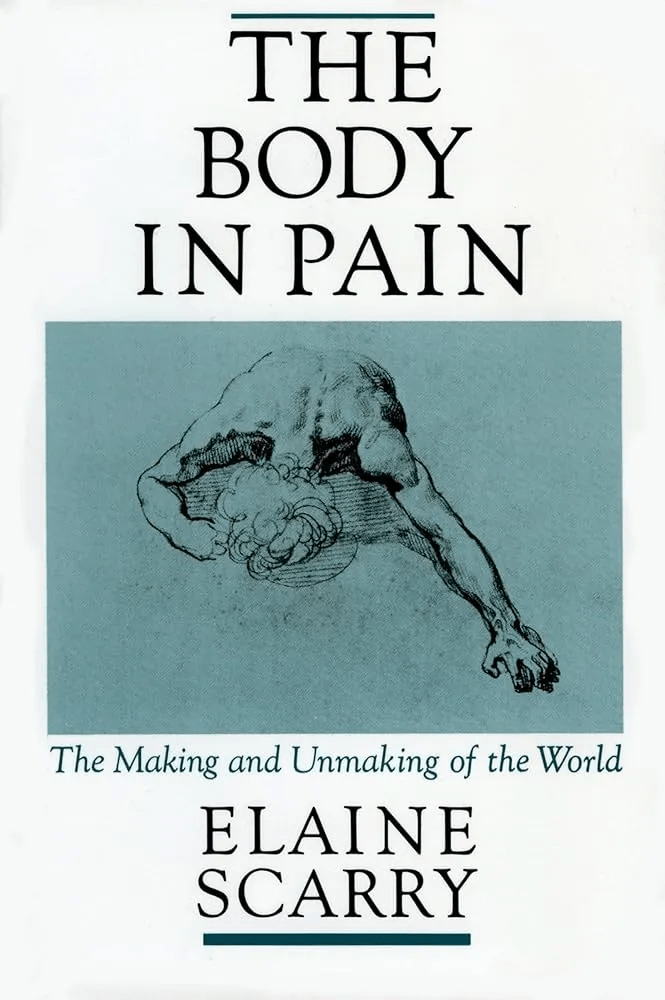
Translator’s Note
For a world that rushes too readily toward war, Scarry’s painstakingly careful arguments never feel excessive. They demand—and reward—the time required to patiently unravel, examine, and reconsider each layer of thought. I feel fortunate to have become immersed in the density of her reasoning, and to have discovered that such immersion is not a burden but a form of intellectual nourishment.
Moving through Scarry’s dense phenomenological landscape has been both exhausting and astonishing. At times, I found myself impatient, eager to move more quickly through the accumulation of details; at others, I was captivated by the richness and subtlety of the material world that her writing gradually brings into view.
At an earlier stage of the translation, I wondered whether Scarry’s relentless attention to minute details—her refusal to leave any phenomenon insufficiently examined—might arise from a kind of scholastic precision that was difficult to appreciate. Yet as I followed her argument more deeply, I came to recognize that this meticulousness is not simply a stylistic choice. It is the very foundation of her method.
In the section “War as a contest,” where Scarry describes how soldiers become intertwined with the objects of their labor, her analytical language gradually acquires a poetic rhythm. These passages allowed me to better understand why existentialist thought, grounded in phenomenological inquiry, has maintained such a profound affinity with literature.
For Scarry, argument is not constructed through abstract formulas or detached verification. Rather, it emerges from a return to the folds and textures of existence itself: from looking with a renewed, almost innocent attentiveness, and allowing judgment to arise from what has been genuinely seen.
Leave a Reply